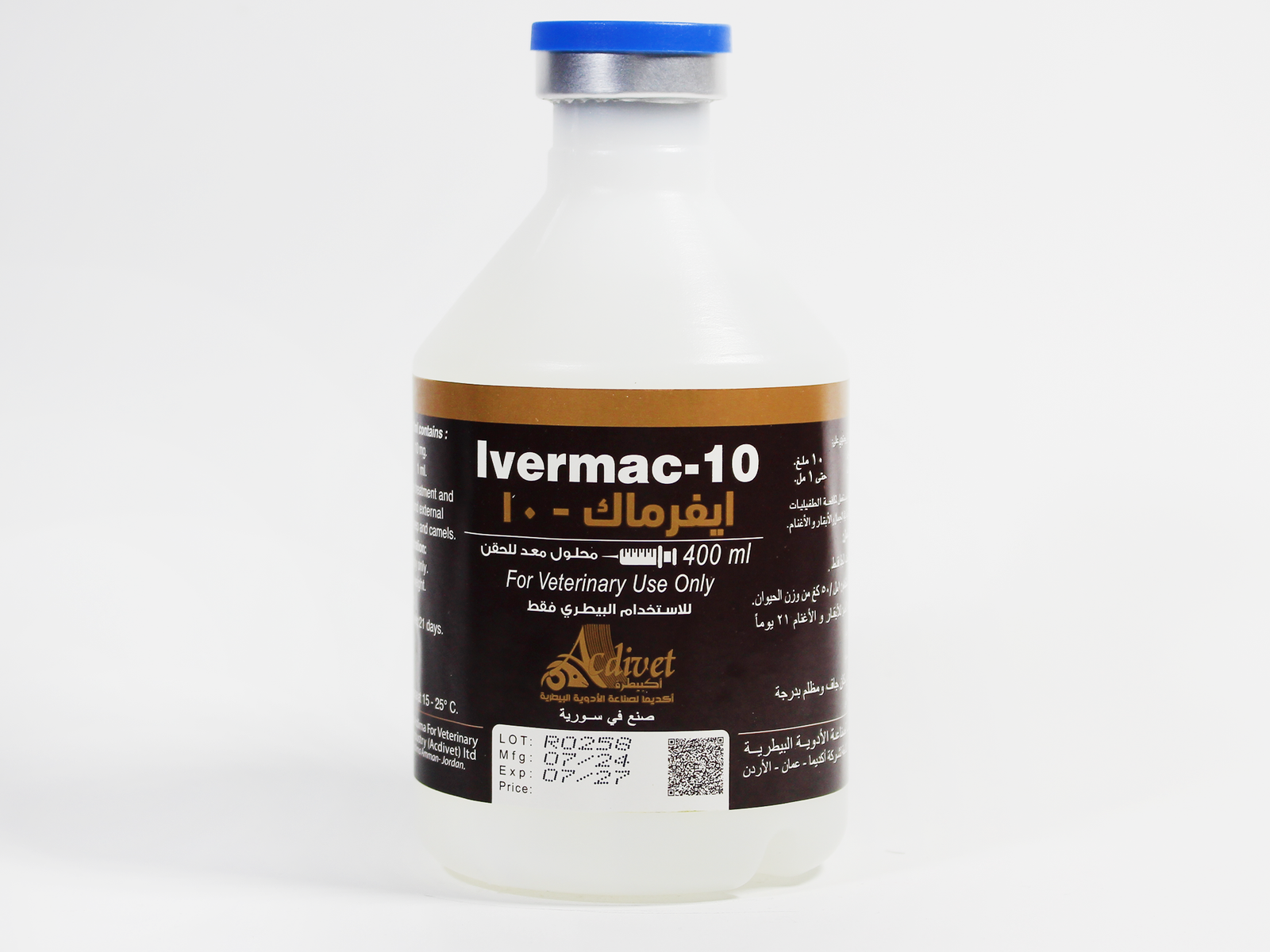
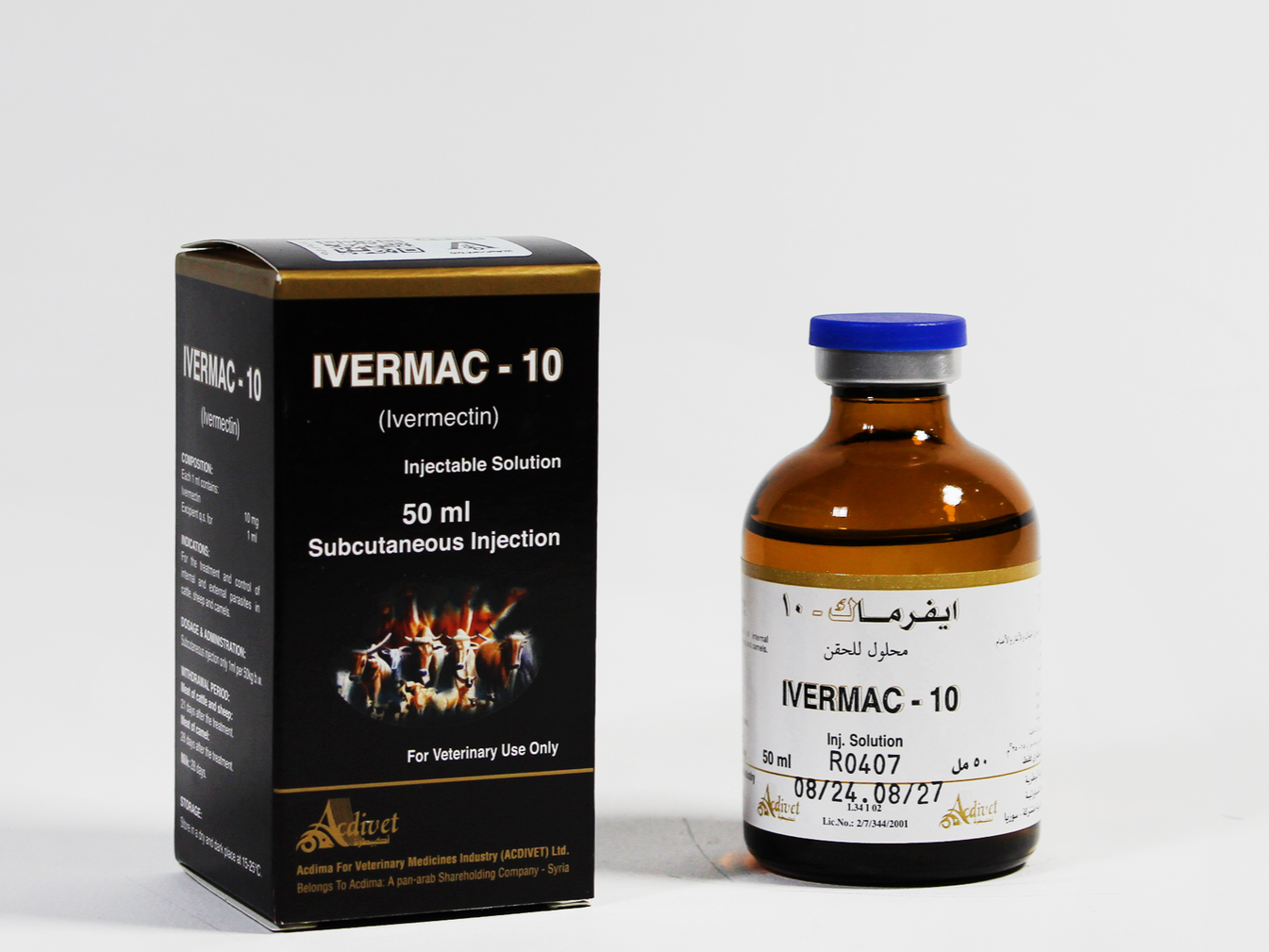
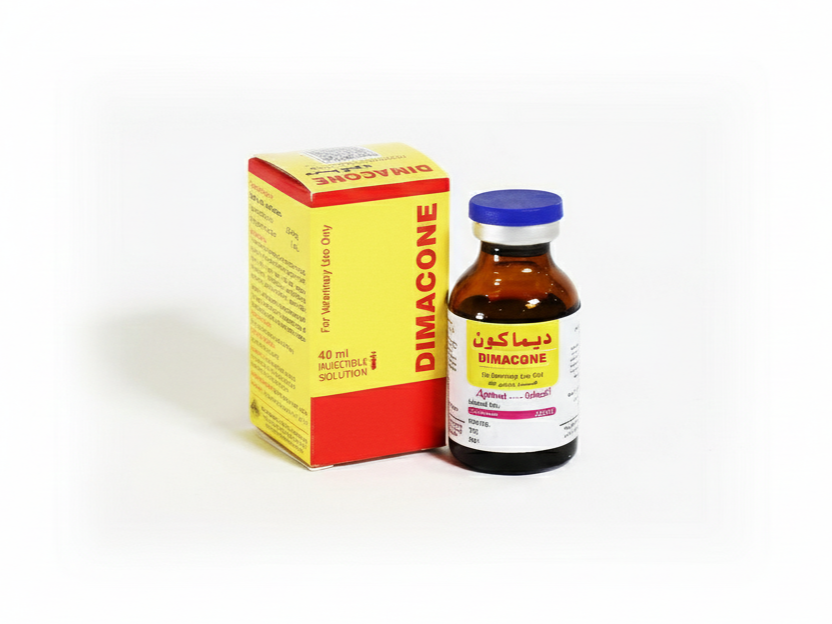
Ivermectin Injection / Ivermac®
What is Ivermectin?
|
Antiparasitic
|
Therapeutic Class
|
|
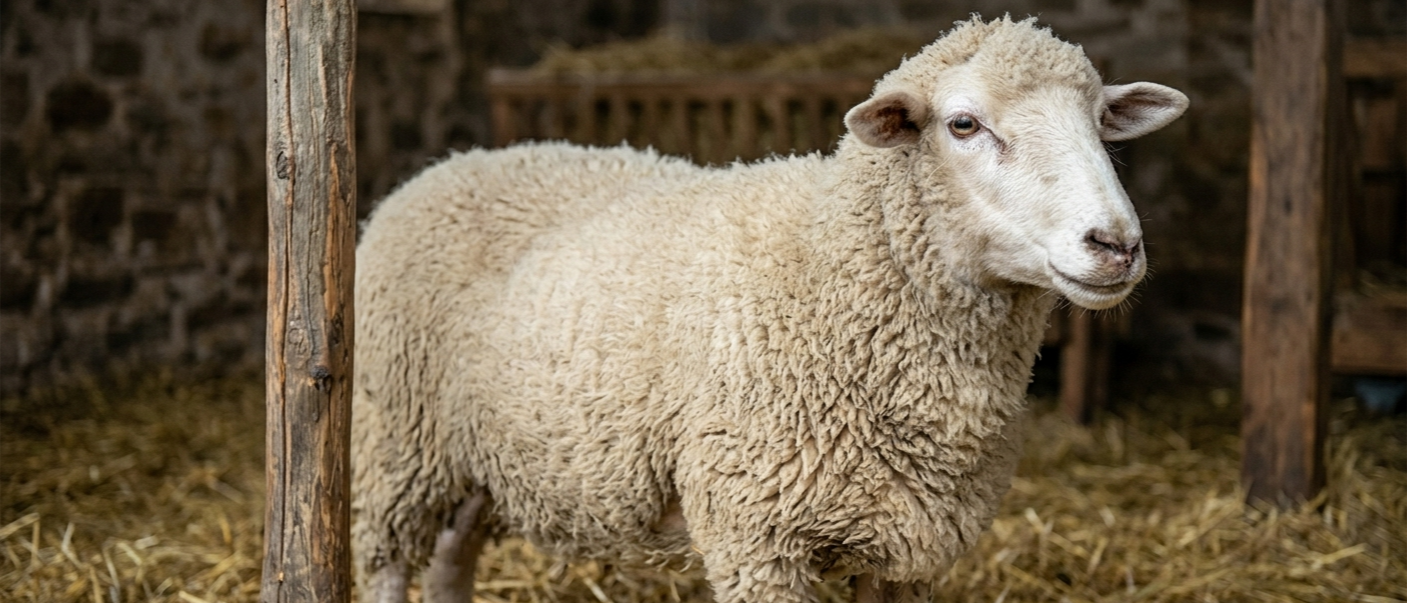
Camel , Cow , Goat , Pig, Sheep
|
Target Species
|
|
10mg Ivermectin
|
Active Ingredients
|
Ivermectin
Avermectin Injection is an antiparasitic drug used to treat internal and external parasites in small and large animals, such as cows and sheep. This drug is used in the treatment and prevention of nematodes such as gastrointestinal roundworms, grubs, lungworms, sucking lice and mange mites.
Avermectin is within the family of medicines called anthelmintics. It is derived from Streptomyces avermitilis's fermented products. Avermectin works by inhibiting the function of aspects of the nervous system within the parasite. This leads to its paralysis and then the death of the parasite.
It is important to note that Avermectin Injection is for veterinary purposes only.
Indications :
This medication is used to combat the following parasites:
- Gastrointestinal and intestinal nematodes (adult stages or developing stages).
- Lungworms.
- Other nematodes, such as Thelazia species (eye worms) and Parafilaria bovicola (adult stages).
- Cattle skin bots.
- Screw-worm fly.
- Lice.
- Mange.
- Ticks.
- Nasal bots.
Dosage and Administration :
It is administered subcutaneously only, and the recommended therapeutic dose is 1 ml per 50 kg of body weight equivalent to 10 mg of ivermectin per 50 kg of body weight.
Treatment of cattle infected with skin bots should be carried out as soon as possible at the end of the botfly breeding season, either before the larval stages develop or after they are fully developed.
Precautions :
Do NOT use Ivermectin Injection for an animal that:
- has a known allergy or hypersensitivity to any of the ingredients.
- is a foal less than 4 months old or a puppy less than 6 weeks old.
- is a dairy animal within 28 days of calving.
- is producing milk for human consumption.
- is of the following species: chelonian, Indigo snake, and skink.
There are known interactions between this medication and other drugs, including benzodiazepines, ketamine, spinosad, amiodarone, carvedilol, clarithromycin, cyclosporine, and ketoconazole.
Compounds that can enhance the effects of Ivermectin, such as barbiturates, tranquilizers, and sedatives, should be used with caution to avoid potential toxicity. Concurrent use of cholinergic agonists can also lead to increased risk of ivermectin-related neurotoxicity.
This drug may cause false-negative results for animals with an occult heartworm infection. Conduct heartworm testing before starting the treatment with Ivermectin and repeat the test after the drug's effect has waned to ensure accurate results. Ivermectin may also alter liver enzymes and other blood parameters, potentially affecting a variety of blood tests.
Only use a subcutaneous injection for cattle and swine. Do not administer Ivermectin Injections through the IV or IM route.
Side Effects :
As with all pharmaceuticals, some unwanted effects can occur from the use of Ivermectin Injection.
Some common side effects may include pain or discomfort at the site of injection.
Serious side effects may include:
- allergic reaction (skin rash, fever, facial swelling, or difficulty breathing)
- shock and neurotoxicity in dogs
- neurotoxicity in mice and rats
If side effects are observed following the administration of this drug, seek veterinary advice. Minor issues like discomfort at the injection site often subside without intervention, but professional guidance should be sought if symptoms persist.
For severe reactions, such as signs of allergic responses or neurotoxicity, immediate veterinary intervention is needed. A veterinarian may administer treatments such as corticosteroids to manage inflammation or epinephrine for severe allergic cases.