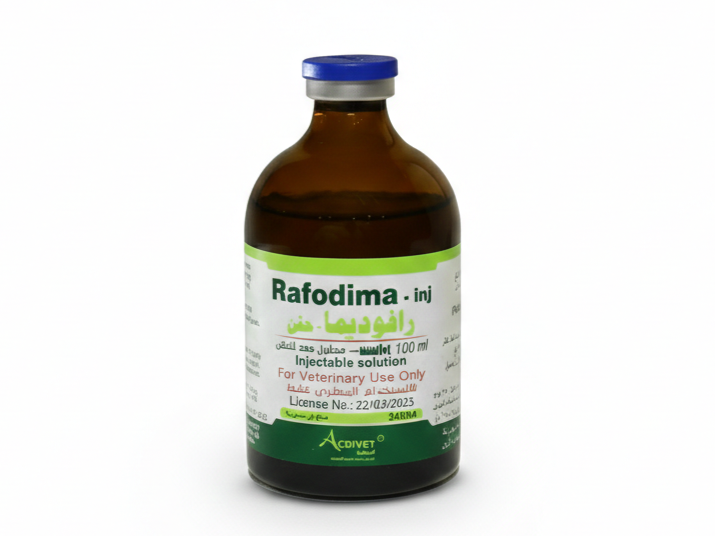
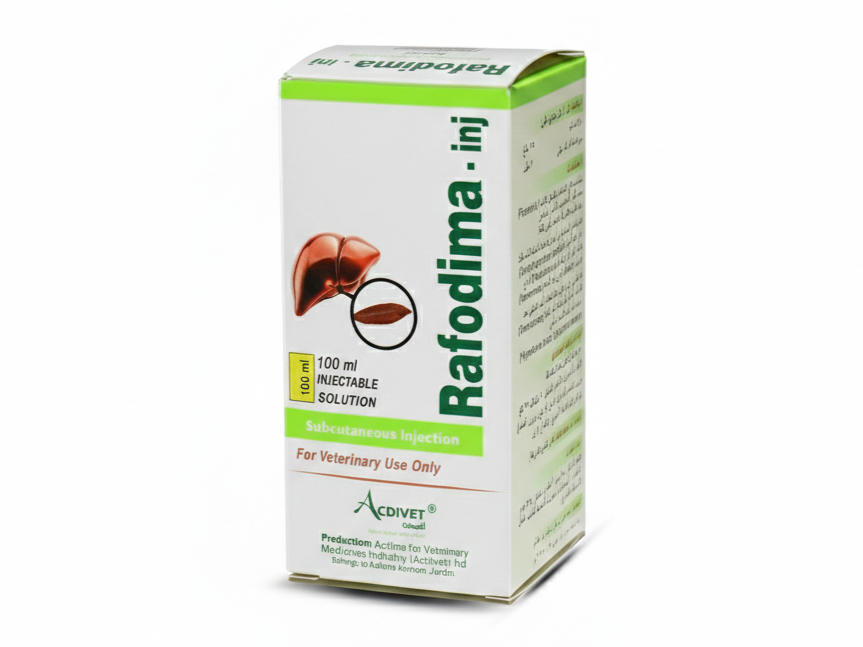
Rafoxanide Injection / Rafodema®
What is Rafoxanide?
|
Antiparasitic
|
Therapeutic Class
|
|
Cattle, Goats, Sheep
|
Target Species
|
|
75mg Rafoxanide
|
Active Ingredients
|
Rafoxanide
Rafoxanide belongs to the salicylanilide group. It is effective against mature and immature liver flukes aged 6–8 weeks and older, and is also active against nasal bot fly larvae in sheep.
Rafoxanide acts as an uncoupler of mitochondrial oxidative phosphorylation, leading to inhibition of ATP synthesis in parasites.
Pharmacokinetic studies in cattle have shown that rafoxanide is absorbed into the bloodstream, reaching an average peak concentration of approximately 23 µg/mL within 2–3 days post-administration. Plasma concentrations are significantly higher than tissue levels. Only one metabolite, 3,5-diiodosalicylic acid, has been identified and detected in blood and milk. Limited information is available regarding excretion; however, rafoxanide appears to be excreted primarily via bile.
Indications :
Treatment of liver fluke (Fasciola) infections in cattle, buffaloes, sheep, and goats, particularly effective against both mature and immature stages.
Control of blood-sucking nematodes such as Oesophagostomum radiatum (adult and fourth-stage larvae), Haemonchus spp., and Giardia spp. in ruminants. Effective against nasal bot fly larvae in sheep and goats (Oestrus ovis) and Effective against cattle grubs in cattle (Hypoderma bovis and Hypoderma lineatum).
Dosage and Administration :
- For subcutaneous injection only.
- Cattle, buffaloes, sheep, and goats: 1 mL per 25 kg body weight (equivalent to 3 mg per kg body weight).
- Repeat the dose 3 weeks after the initial treatment if necessary.
- The product is well tolerated up to three times the recommended dose without the appearance of adverse clinical signs.
Precautions :
- Do not administer to lactating animals producing milk for human consumption.
- Do not inject more than 10 mL at a single injection site.
- Do not administer intravenously or intramuscularly.
Side Effects :
Mild transient coughing may occur in some animals.