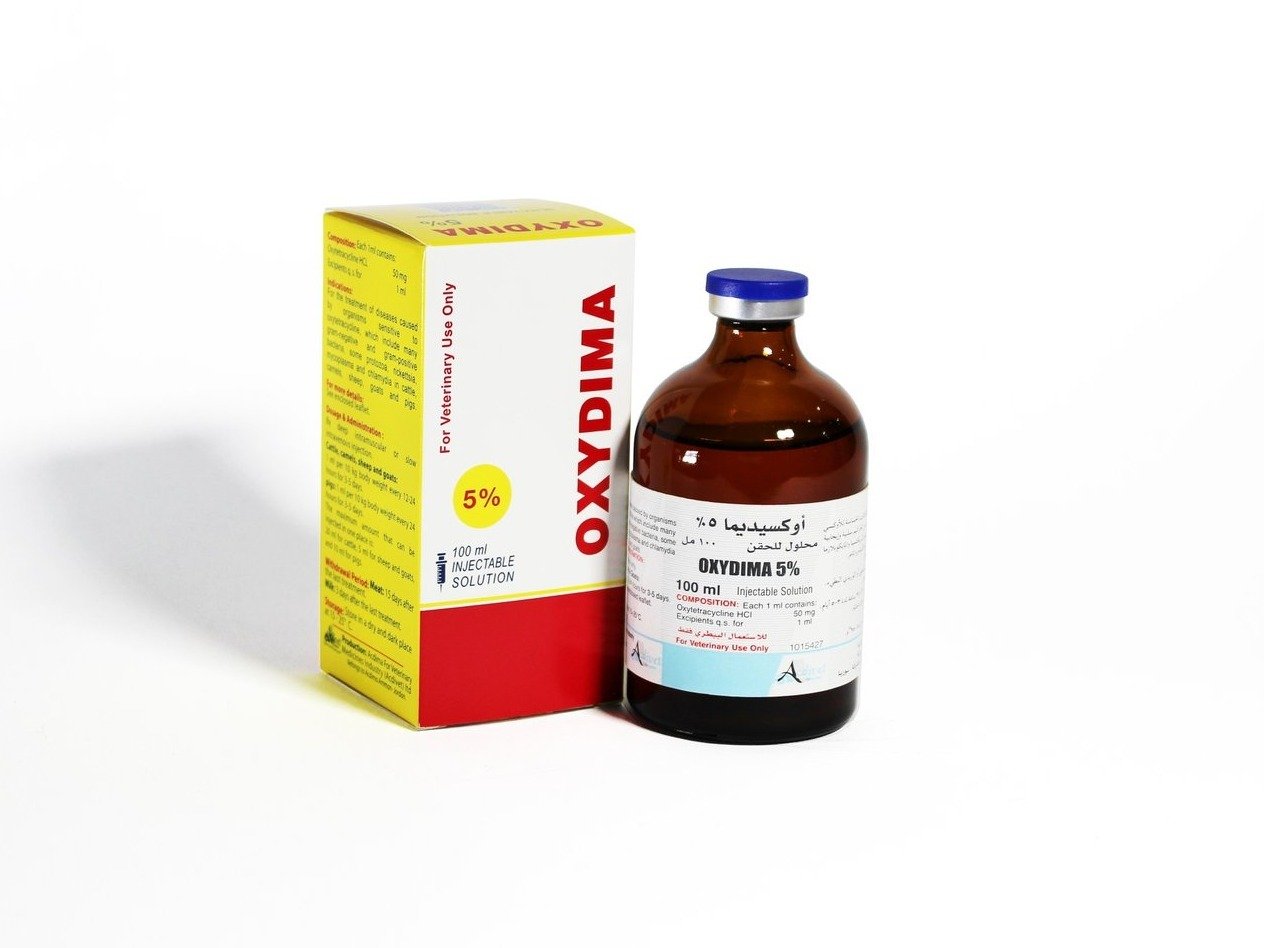
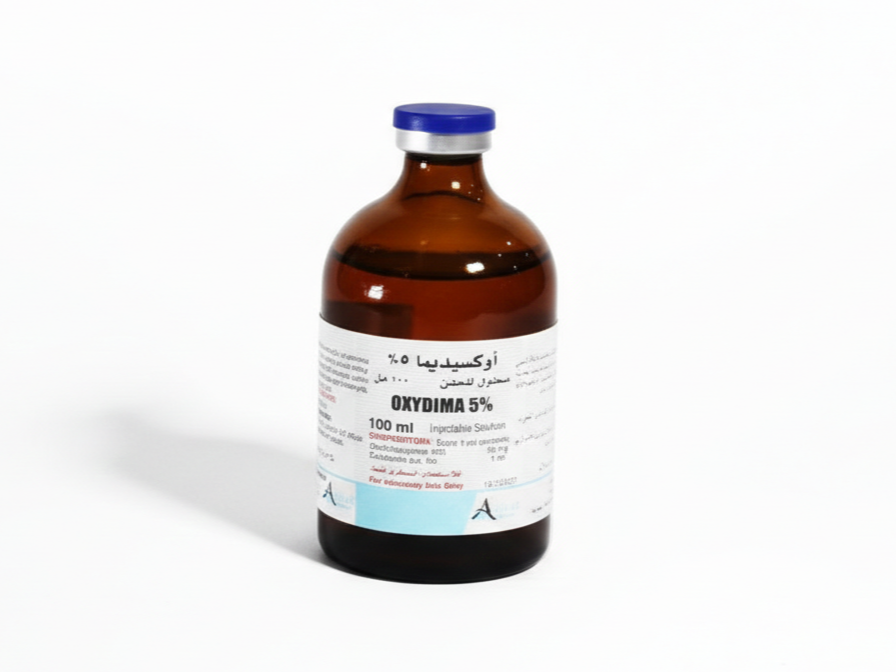
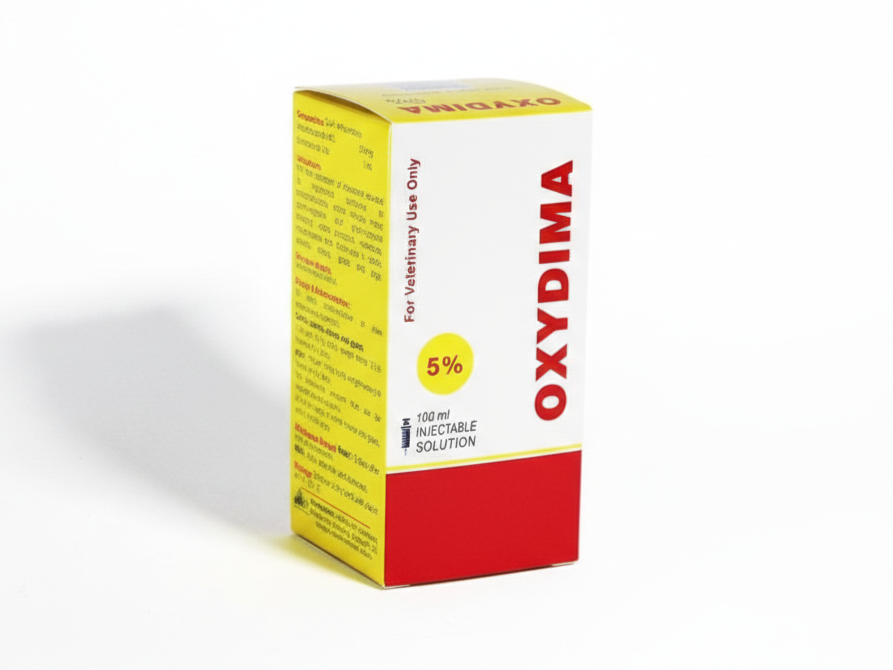
Oxytetracycline HCl Injection / Oxydima-5% ®
What is Oxytetracycline HCl?
|
Antibiotic
|
Therapeutic Class
|
|
Cow, Goat, Horse, Sheep, Pig
|
Target Species
|
|
50mg Oxytetracycline HCl
|
Active Ingredients
|
Oxytetracycline HCl
Oxytetracycline HCl Injection is an antibiotic used to treat a wide variety of bacterial diseases in livestock animals like cows, goats, horses, sheep and pigs. In cattle, it is indicated for the treatment of infections such as pneumonia, shipping fever, foot rot, diphtheria, and bacterial enteritis.
Oxytetracycline is also indicated for the treatment of bacterial enteritis and leptospirosis and the prevention of atrophic rhinitis in swine. This antibiotic may be used to treat anthrax and many other types of infections in a wide range of animals.
Oxytetracycline HCl is a salt of oxytetracycline. It is a broad-spectrum antibiotic in the tetracycline family, which has been derived from the fermented product of Streptomyces rimosus. Oxytetracycline works by inhibiting protein synthesis in the bacteria. It is active against both gram-positive and gram-negative bacteria, including Mycoplasma pneumoniae, Diplococcus pneumoniae, and Escherichia coli. It also shows action against Chlamydia, Rickettsia, and Spirochetes.
It is important to note that this formulation of oxytetracycline is for veterinary purposes only. Oxytetracycline HCl has a longer shelf life and is more stable when stored properly in an aqueous solution. The salt formulation of oxytetracycline is easier to dissolve in water.
Indications :
It is prescribed for cattle to treat the following conditions:
- Pneumonia.
- Pasteurellosis.
- Foot rot.
- Actinobacillosis.
- Joint diseases.
- As an adjunct treatment for metritis and mastitis.
- Anaplasmosis.
- Actinomycosis (lumpy jaw).
- Hydropericardium (water heart).
- Abscesses and skin or local infections.
- Post-surgical infections.
It is prescribed for sheep and goats in the following cases:
- Treatment of pneumonia.
- Metritis (uterine infections).
- Mastitis.
- Foot rot.
- Joint diseases.
- Chlamydiosis.
- Abscesses.
- Treatment of infections following surgery and postpartum infections.
Dosage and Administration :
Administer by deep intramuscular injection or slow intravenous injection:
- Cattle, camels, sheep, and goats: 1 ml per 10 kg of body weight every 12–24 hours for 3–5 days.
The maximum volume that may be injected at a single site is 20 ml for cattle and 5 ml for sheep and goats.
Precautions :
Do NOT use Oxytetracycline HCl Injection for an animal that:
- has a known allergy or hypersensitivity to any of the ingredients.
- has a known allergy or hypersensitivity to other tetracyclines.
Treatment with this drug should be administered with caution if an animal:
- is pregnant.
- has renal insufficiencies.
Side Effects :
As with all pharmaceuticals, some unwanted effects can occur from the use of Oxytetracycline HCl Injection.
Some common side effects may include but are not limited to:
- irritation at the injection site
- gastrointestinal effects (upset stomach, nausea, diarrhea)
- sensitivity to sunlight
- rash
Serious side effects may include : allergic reaction