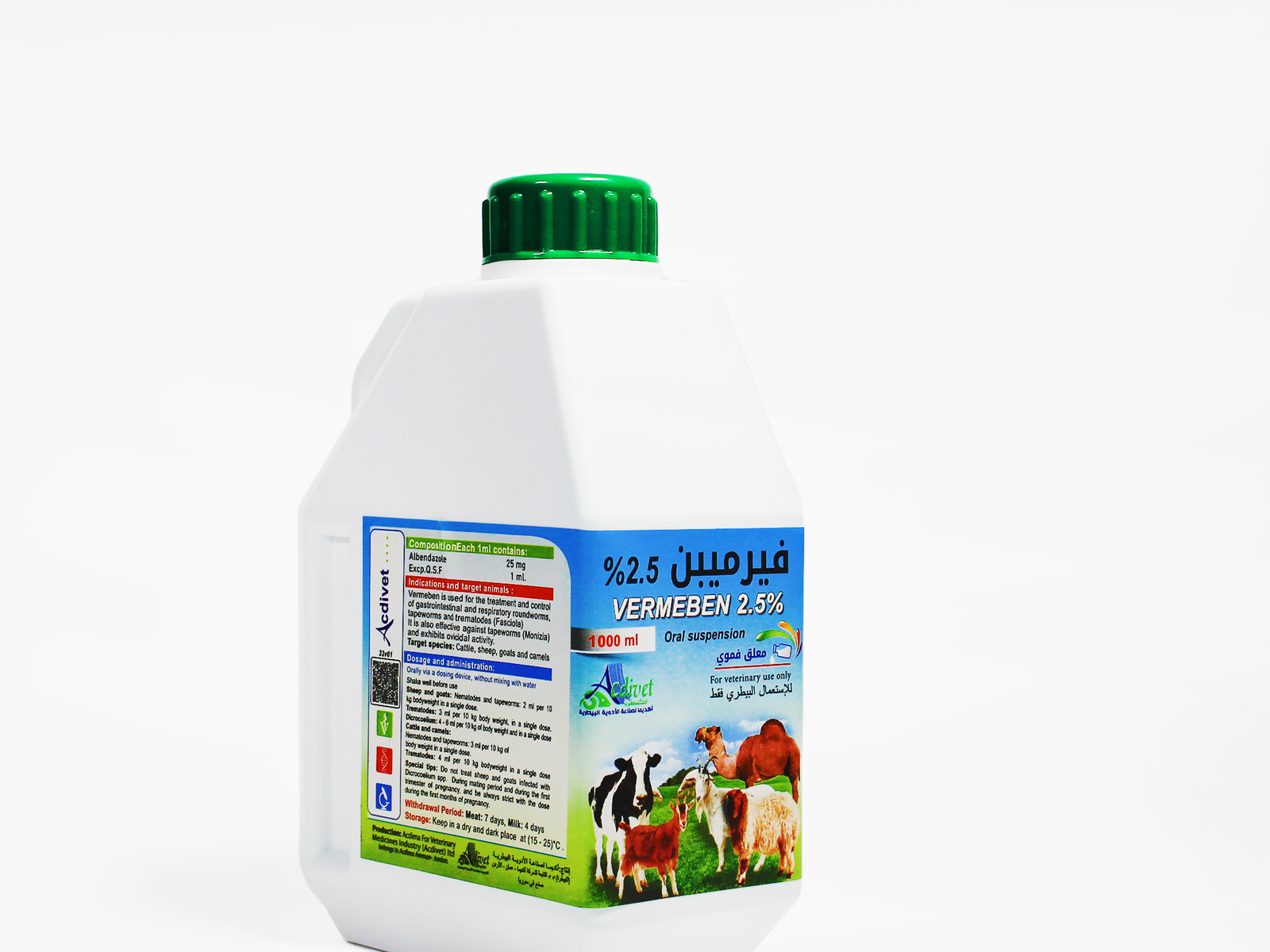
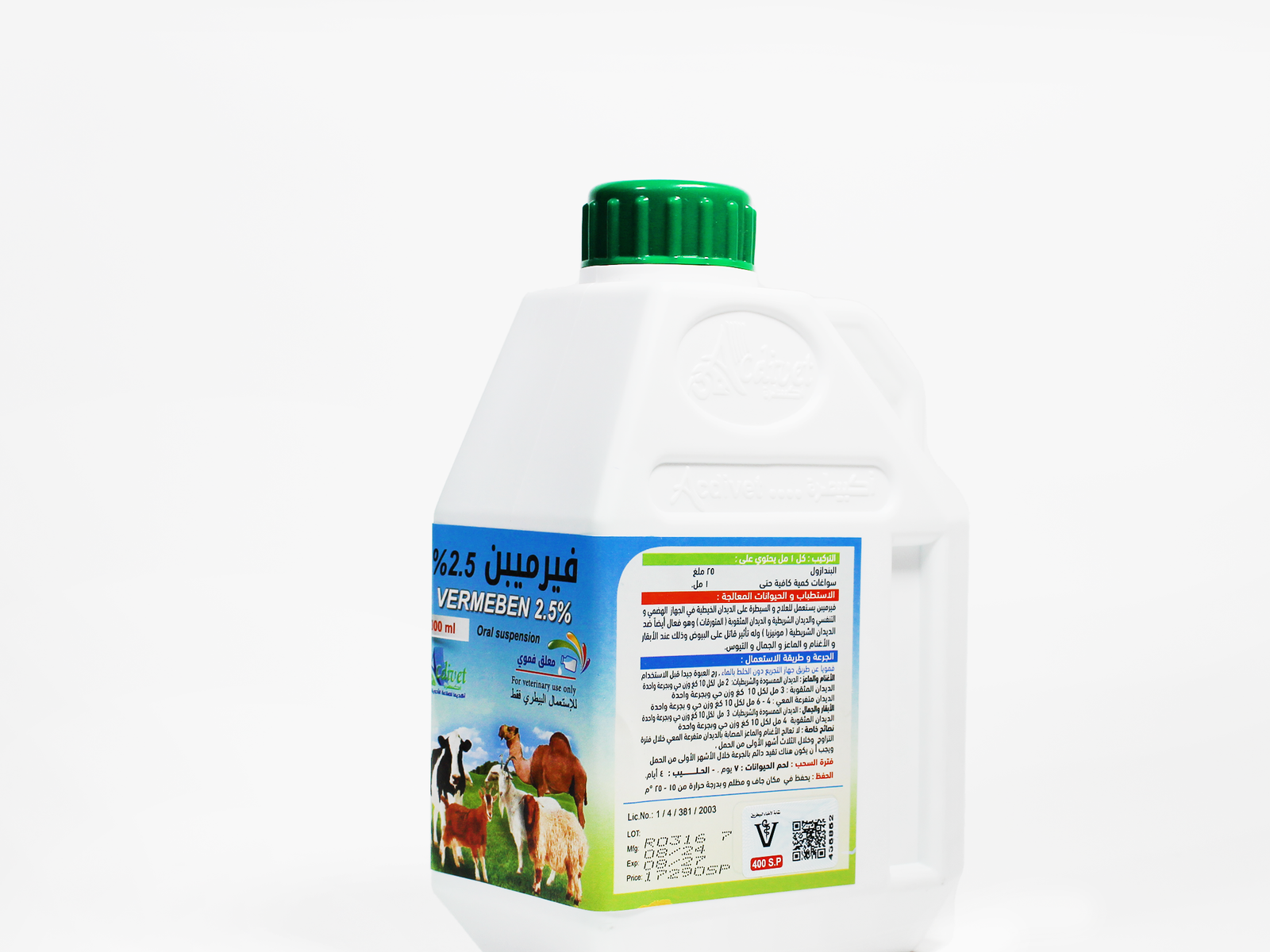
Vermeben 2.5%


lbendazole Oral Suspension is a broad-spectrum antiparasitic medicine for veterinary use.

0$

Albendazole Oral Suspension / Vermeben 2.5%®

What is Albendazole?

                       Antiparasitic

   Therapeutic Class

        Camel, Cat, Cow, Dog, Goat, Horse, Pig, Poultry, Sheep

        Target Species

                          25mg Albendazole

 Active Ingredients

Albendazole

Albendazole Oral Suspension is an anthelmintic drug used to treat various parasite infections, including nematodes, cestodes, and protozoa, in many species of animals like camels, cats, cows, dogs, goats, horses, poultry, sheep, and pigs. It is indicated for the treatment and prevention of gastrointestinal and pulmonary nematodiasis, taeniasis, and chronic liver flukes.

Albendazole belongs to the drug class called benzimidazole anthelmintics. It exhibits broad-spectrum action against many varieties of worms, such as roundworms, tapeworms, and flukes of domestic animals and humans. This means it can be used in various animal species, making it a valuable tool in both small-scale pet care and large-scale livestock management.

The active ingredient works by inhibiting tubulin polymerization. As an effect, the worm's ability to utilize glucose is impaired, which results in immobilization and death.

This drug kills the worms, but eggs can survive a few weeks after treatment, so treatment may need to be repeated.

The fact that Albendazole targets adult worms effectively but may not completely eliminate eggs or larvae is an important consideration in treatment protocols. This underscores the need for a strategic deworming schedule. Veterinarians typically recommend a follow-up treatment after a few weeks to target parasites at different stages of their lifecycle, ensuring a more comprehensive elimination of the infestation. This repeat dosing is especially important in environments where reinfestation risks are high. It is important to note that Albendazole Oral Suspension is for veterinary purposes only. This formulation is intended to be prescribed by a veterinary doctor or animal care specialist.

Indications :

Vermiben is prescribed for the treatment and control of nematodes in the gastrointestinal and respiratory tracts, as well as tapeworms and flukes (trematodes). It is also effective against tapeworms (Moniezia) and has an ovicidal effect on parasite eggs.

Animals treated: Cattle, sheep, goats, and camels.

Dosage and Administration :

Administer orally after shaking the bottle well.

Sheep and Goats:

  • Nematodes and tapeworms: 2 ml per 10 kg body weight, single dose.
  • Flukes: 3 ml per 10 kg body weight, single dose.
  • Intestinal branching flukes: 4–6 ml per 10 kg body weight, single dose.

Cattle and Camels:

  • Nematodes and tapeworms: 3 ml per 10 kg body weight, single dose.
  • Flukes: 4 ml per 10 kg body weight, single dose.

Precautions :

Do NOT use Albendazole Oral Suspension for an animal that:

  • has a known allergy or hypersensitivity to any of the ingredients.
  • is in the first trimester of pregnancy.
  • is a pigeon or a dove.

Treatment with this drug should be administered with caution for an animal that:

  • has liver disease.
  • is pregnant or lactating.

There are known interactions between Albendazole and other drugs, including cimetidine, dexamethasone, and praziquantel.

Always wash hands thoroughly after handling this product. Pregnant women should not handle Albendazole products, as it can be absorbed through direct skin contact.

Side Effects :

As with all pharmaceuticals, some unwanted effects can occur from the use of Albendazole Oral Suspension.

Some common side effects may include but are not limited to:

  • anorexia in dogs
  • mild lethargy or depression in cats

Serious side effects may include:

  • allergy or hypersensitivity reactions
  • severe diarrhea
  • neutropenia
  • aplastic anemia in dogs or cats

Managing the effects of Albendazole Oral Suspension involves monitoring the animal for any adverse reactions and seeking immediate veterinary assistance if serious side effects occur. For a comprehensive list of all possible side effects of this medication, consult a veterinarian.

Albendazole Oral Suspension is commonly used for deworming various animals, such as:

  • Camels: Albendazole is used in camels to treat and control a variety of internal parasites, including roundworms, tapeworms, and flukes, which can affect their health and productivity.
  • Cats: Albendazole is occasionally used in cats to treat certain intestinal parasites, although other medications are often preferred for feline deworming.
  • Cows: In cattle, it is used to manage gastrointestinal parasites like stomach and intestinal worms.
  • Dogs: It is used in dogs to treat a range of intestinal parasites, including roundworms, hookworms, tapeworms, and whipworms.
  • Goats: Albendazole is commonly administered to goats to control various internal parasites, including gastrointestinal worms.
  • Horses: Horses are susceptible to a variety of internal parasites, and Albendazole is used to treat and prevent infections caused by roundworms, tapeworms, and strongyles.
  • Poultry: The drug is used in poultry, such as chickens and turkeys, to combat intestinal parasites that can affect egg production and overall flock health.
  • Sheep: Albendazole is used in sheep to control gastrointestinal parasites.
  • Pigs: Albendazole is administered to pigs to treat and prevent parasitic infections, such as roundworms and lungworms.

It's used to treat and control various parasitic infections caused by nematodes, cestodes, and protozoa. It is indicated for the treatment of parasites such as:

  • gastrointestinal worms (Bunostomum, Cooperia, Chabertia, Haemonchus, Nematodirus, Oesophagostomum, Ostertagia, Strongyloides, and Trichostrongylus)
  • liver flukes (Fasciola hepatica, adults only)
  • lungworm (Dictyocaulus viviparus and D. filaria.)
  • tapeworms (Moniezia)

This medicine is recommended for many types of animals, including horses, poultry, companion animals, and livestock animals such as camels, goats, sheep, and pigs.

This medicine has been manufactured as a liquid, which is intended to be mixed with drinking water and administered orally, either directly into the mouth or mixed with a small amount of food; the suspension should be shaken well before use.

Yes, but using it on lactating or pregnant animals should be done under the guidance of a veterinarian. Its use in these animals should only be considered if the benefits outweigh the risks.

Albendazole Oral Suspension is typically available by prescription only.

This drug is effective against a range of internal parasites, but efficacy may vary. Consult with a veterinarian to determine if it is the right treatment for the specific parasites affecting the animal.

The drug is effective against many life stages of parasitic worms, including some larval stages, adult stages, and in some cases, the egg stage. But its efficacy can vary based on the parasite species and the stage of its life cycle. A veterinarian can provide specific advice.

It can be used for both the treatment and prevention of parasitic infections.

Animals should not be fed undernutrition diets as Albendazole requires adequate nutrient levels for optimal efficacy. Also avoid giving high-fat diets immediately before or after administering Albendazole, as this can affect the absorption of the drug.

This can vary depending on the type of parasitic infection and the overall health of the animal. Some improvement may be noticed within a few days, but it might take longer for the full effects to be evident. Always complete the full course of treatment as prescribed by a veterinarian.

The withdrawal time is 8-14 days for meat and 3-5 days for milk. The exact duration will depend on local regulations.

It should be stored in a dark, dry location between 2-25°C. Keep the bottle tightly sealed when not in use. Ensure that the bottle is tightly closed and out of reach of children and pets. Do not use the medication past its expiration date, and dispose of any unused medication according to local regulations.

The usual dose is 7.5-15mg/kg. The maximum dosage is 15mg/kg of body weight in heifers.

The typical dosage for dogs is 7.5-15mg/kg of body weight.

The usual dose for goats is 7.5-7.6mg/kg of body weight. The maximum recommended dosage is 10mg/kg of body weight.

For horses, the typical dosage is 7.5-15mg/kg of body weight.

It is typically administered to poultry at a rate of 7.5-15mg/kg of body weight.

It is typically given to pigs at a rate of 7.5-15mg/kg of body weight.

If an overdose is suspected, seek immediate veterinary attention. Do not attempt to administer any more medication without professional guidance, and be prepared to provide information about the amount and time of the last dose given.

Administer it as soon as remembered. But if it's close to the time for the next scheduled dose, skip the missed dose and continue with the regular schedule. Do not double up on doses to make up for the missed one.

Refer to a veterinary doctor or pharmacist for guidelines on dosage.
WhatsApp WhatsApp