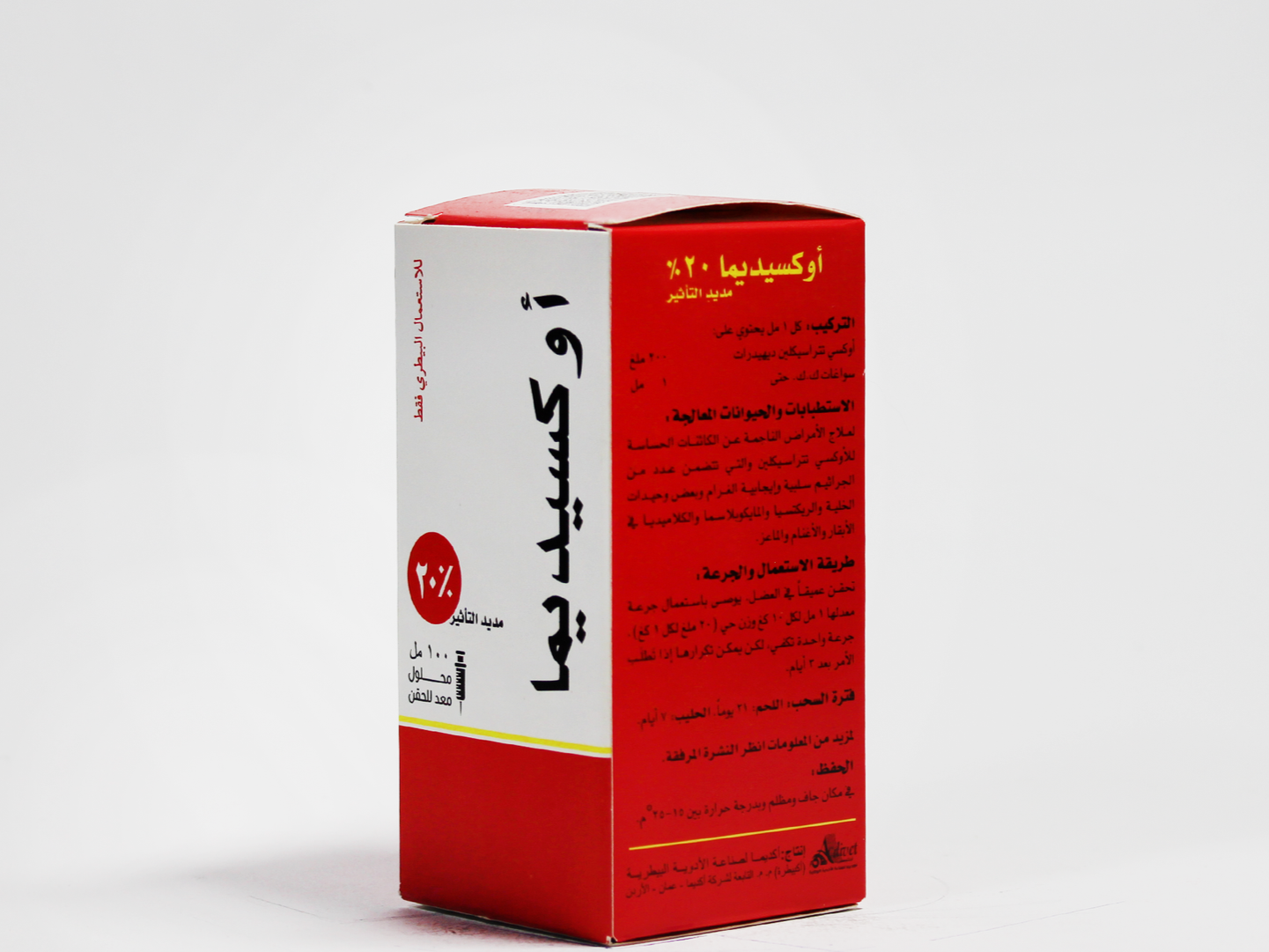
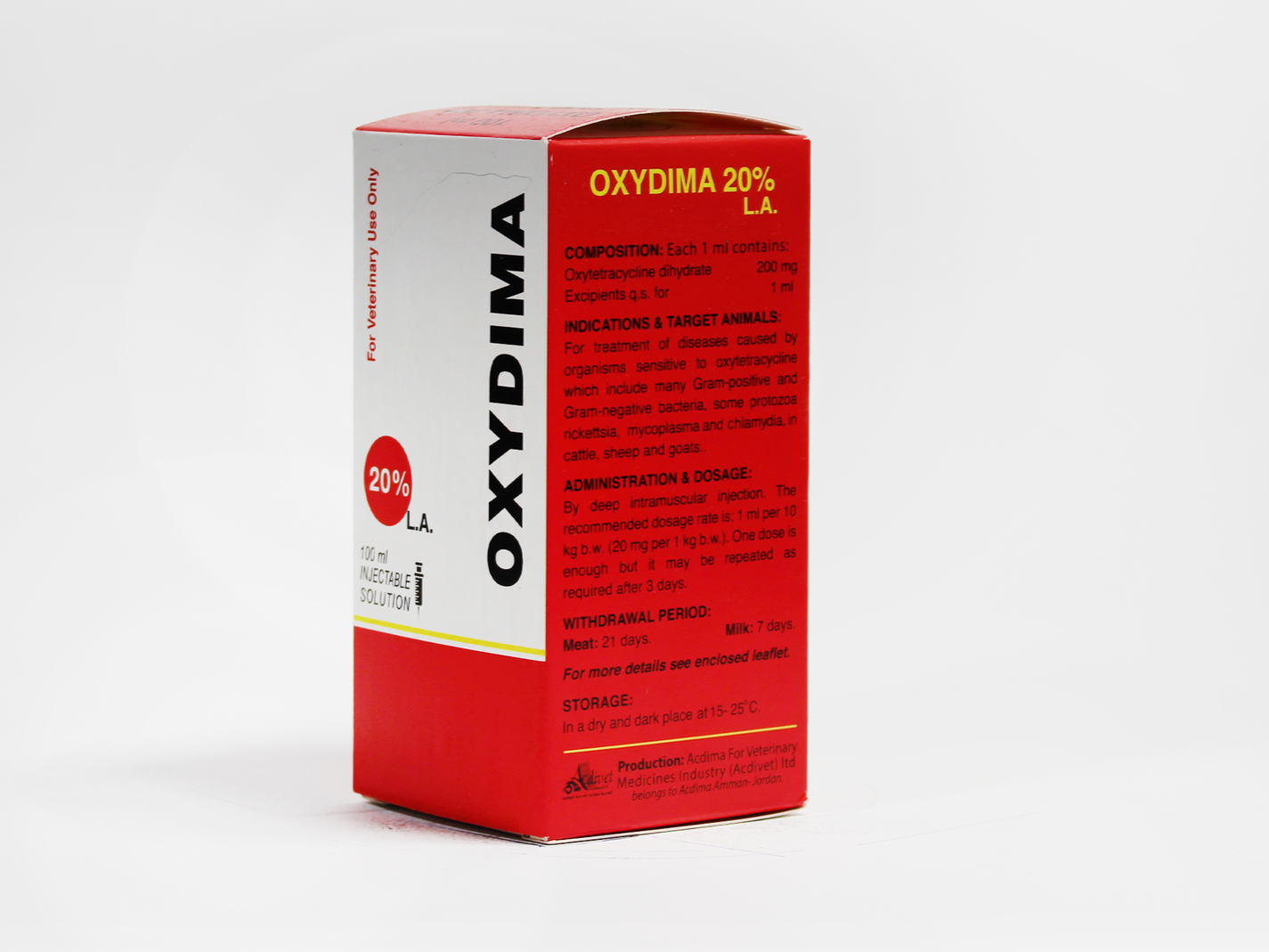
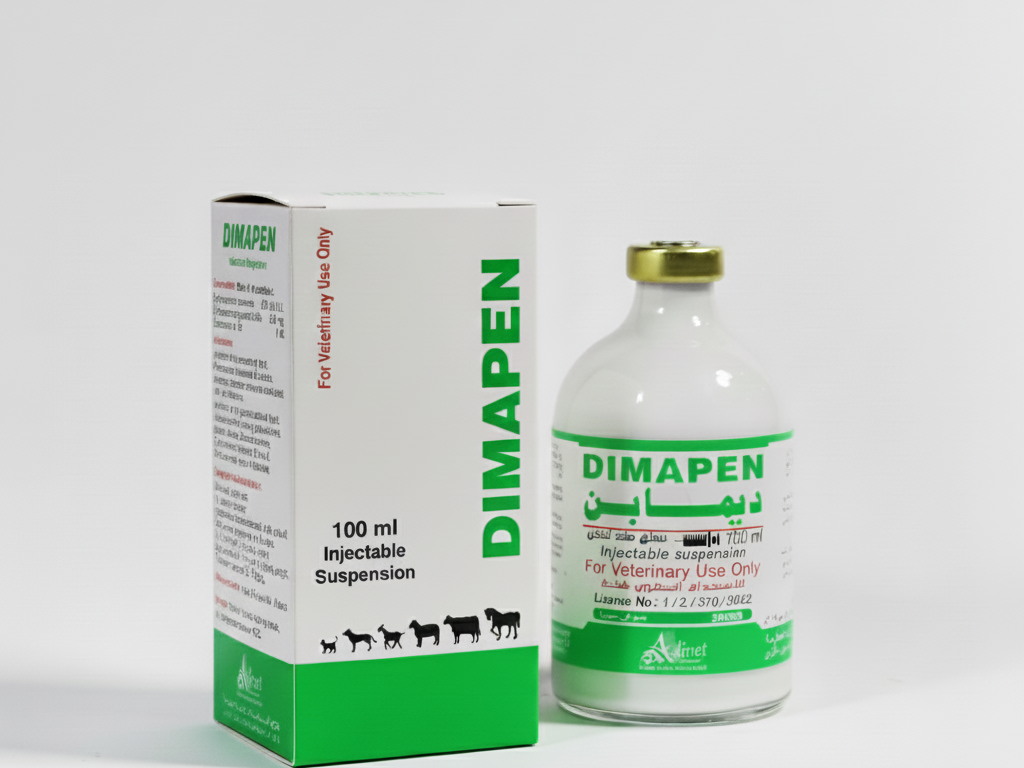
Oxytetracycline Injection / Oxydima 20%®
What is Oxytetracycline?
|
Antibiotic
|
Therapeutic Class
|
|
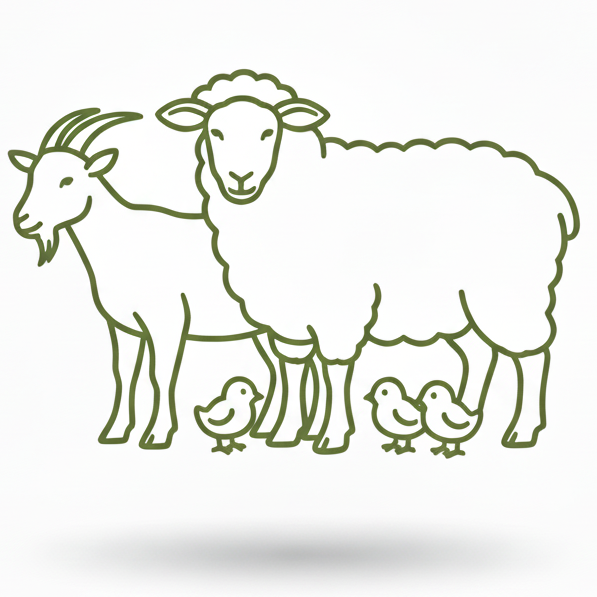
Cow, Goat, Horse, Sheep, Pig
|
Target Species
|
|
200mg Oxytetracycline dihydrate
|
Active Ingredients
|
Oxytetracycline dihydrate
Oxytetracycline Injection is an antibiotic used to treat many kinds of bacterial diseases in livestock like cows, goats, horses, sheep and pigs. In cattle, it is indicated for infections such as pneumonia, shipping fever, foot rot, diphtheria, bacterial enteritis, wooden tongue, leptospirosis, and anaplasmosis.
Oxytetracycline is also indicated for the treatment of bacterial enteritis and leptospirosis and the prevention of atrophic rhinitis in pigs. The drug works by targeting and inhibiting the bacteria responsible for intestinal infections, alleviating symptoms like diarrhea and abdominal discomfort. For leptospirosis, which can affect the liver and kidneys, it helps by eradicating the Leptospira bacteria, reducing the risk of severe health complications and aiding in recovery.
Oxytetracycline is a broad-spectrum antibiotic in the tetracycline family. It is derived from the fermented product of Streptomyces rimosus. Oxytetracycline works by inhibiting protein synthesis in the bacteria. It is active against both gram-positive and gram-negative bacteria, including Mycoplasma pneumoniae, Diplococcus pneumoniae, and Escherichia coli. It also shows action against Chlamydia, Rickettsia, and spirochetes.
Oxytetracycline exerts its therapeutic effect by binding to the 30S ribosomal subunit of bacteria, inhibiting the binding of aminoacyl-tRNA to the RNA-ribosome complex. This action blocks the addition of amino acids to the growing peptide chain during protein synthesis. As a result, the bacterial cell's ability to synthesize proteins essential for its survival and multiplication is impeded.
This mechanism of action is effective against a wide range of bacteria due to its ability to penetrate bacterial cells and affect intracellular pathogens. But its efficacy can be influenced by the bacteria's susceptibility and the drug concentration achieved at the site of infection. While oxytetracycline is effective against many types of bacteria, its use should be guided by susceptibility testing where possible.
This formulation of oxytetracycline is for veterinary purposes only.
Indications :
Cattle : For the treatment of pneumonia , pasteurellosis , foul in the foot , Actinobacillosis , joint ill and supportive therapy in mastitis and metritis. For the treatment of Anaplasmosis , streptothricosis heart water, abscesses , local and cutaneous inflammations .
For the treatment and control of post parturient and post operative infections. Sheep and goats : For the treatment of pneumonia , mastitis , metritis , foot - rot and joint ill, chlamydiosis , abscesses , for the treatment and control of post parturient and post operative infections .
Pigs : for the treatment of Erysipelas , pneumonia , mastitis , metritis , Agalactia syndrome , post operative infections and pasteurellosis.
Dosage and Administration :
the recommended dosage rate is 20 mg per 1 kg b.w ( 1 ml per 10 kg b.w ) by deep intramuscular injection .
Maximum recommended dose at any one site :
Cattle 20 ml , Sheep and goats 5 ml , pigs 10 ml
One dose is enough but its may be repeated as required after 3 day
Precautions :
Do NOT use Oxytetracycline Injection for an animal that:
- has a known allergy or hypersensitivity to any of the ingredients.
- has had a hypersensitivity reaction to other tetracyclines.
Treatment with this drug should be administered with caution for an animal that:
- is pregnant.
- has renal insufficiencies.
Caution is advised when using this antibiotic in very young animals, as tetracyclines can interfere with bone growth and tooth development due to their ability to chelate calcium. Avoid concurrent use with other potentially nephrotoxic or hepatotoxic drugs to prevent additive effects.
As with all antibiotics, the complete course prescribed by the veterinarian should be followed to minimize the risk of resistance development, even if the animal appears to have recovered.
Side Effects :
As with all pharmaceuticals, some unwanted effects can occur from the use of Oxytetracycline Injection.
Some common side effects may include but are not limited to:
- irritation at the injection site
- gastrointestinal effects (upset stomach, nausea, diarrhea)
- sensitivity to sunlight
- rash
Serious side effects may include: allergic reaction
For mild reactions, such as local irritation at the injection site or mild gastrointestinal upset, monitoring the animal closely and providing supportive care as needed may be sufficient. If the animal exhibits more severe symptoms, such as a significant allergic reaction, rash, or pronounced gastrointestinal distress, seek veterinary attention promptly.
A complete record of any side effects should be kept and reported to the veterinarian, as this information is vital for adjusting the treatment plan.
For a comprehensive list of all possible side effects of this medication, consult a veterinarian.