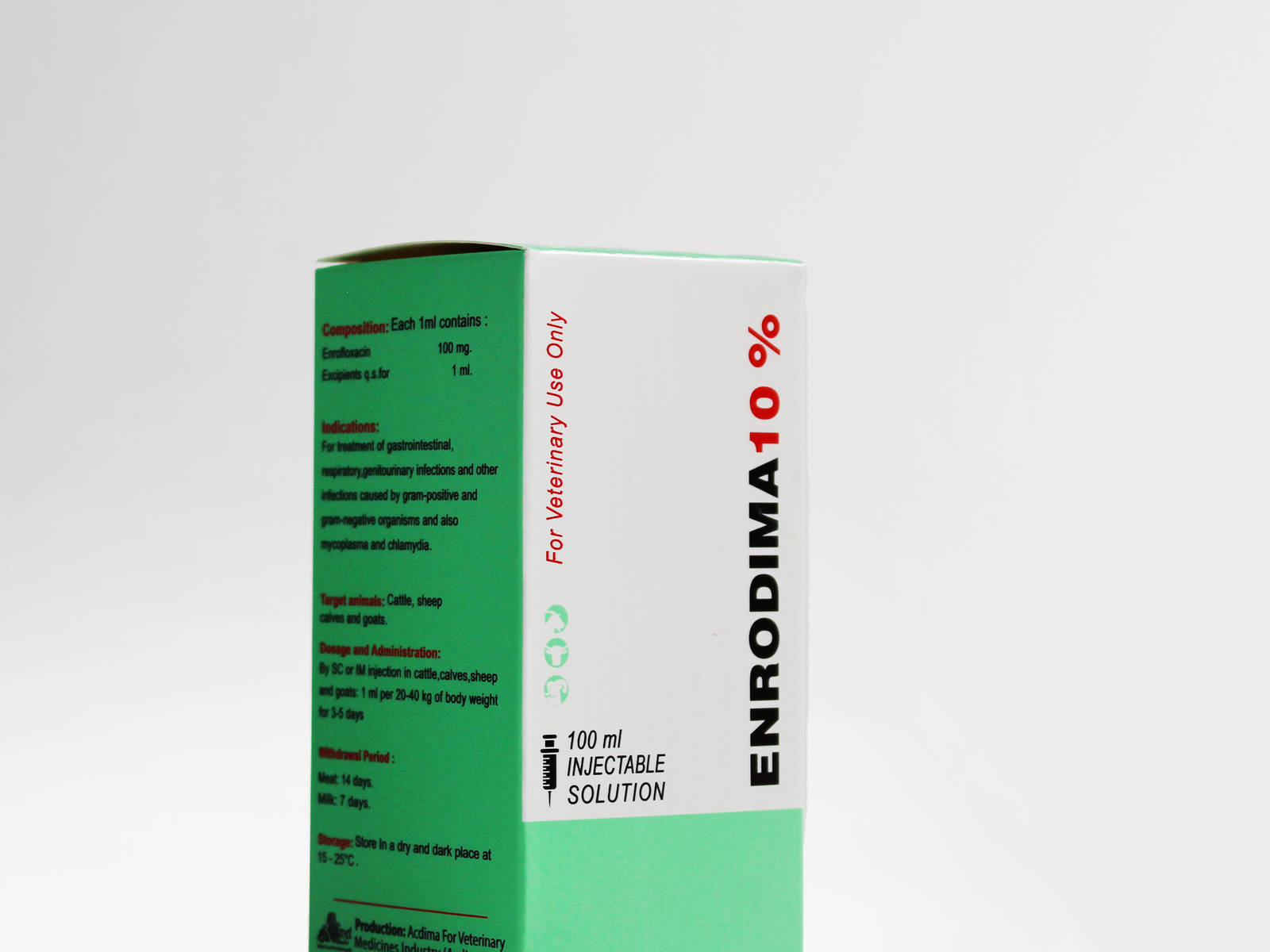
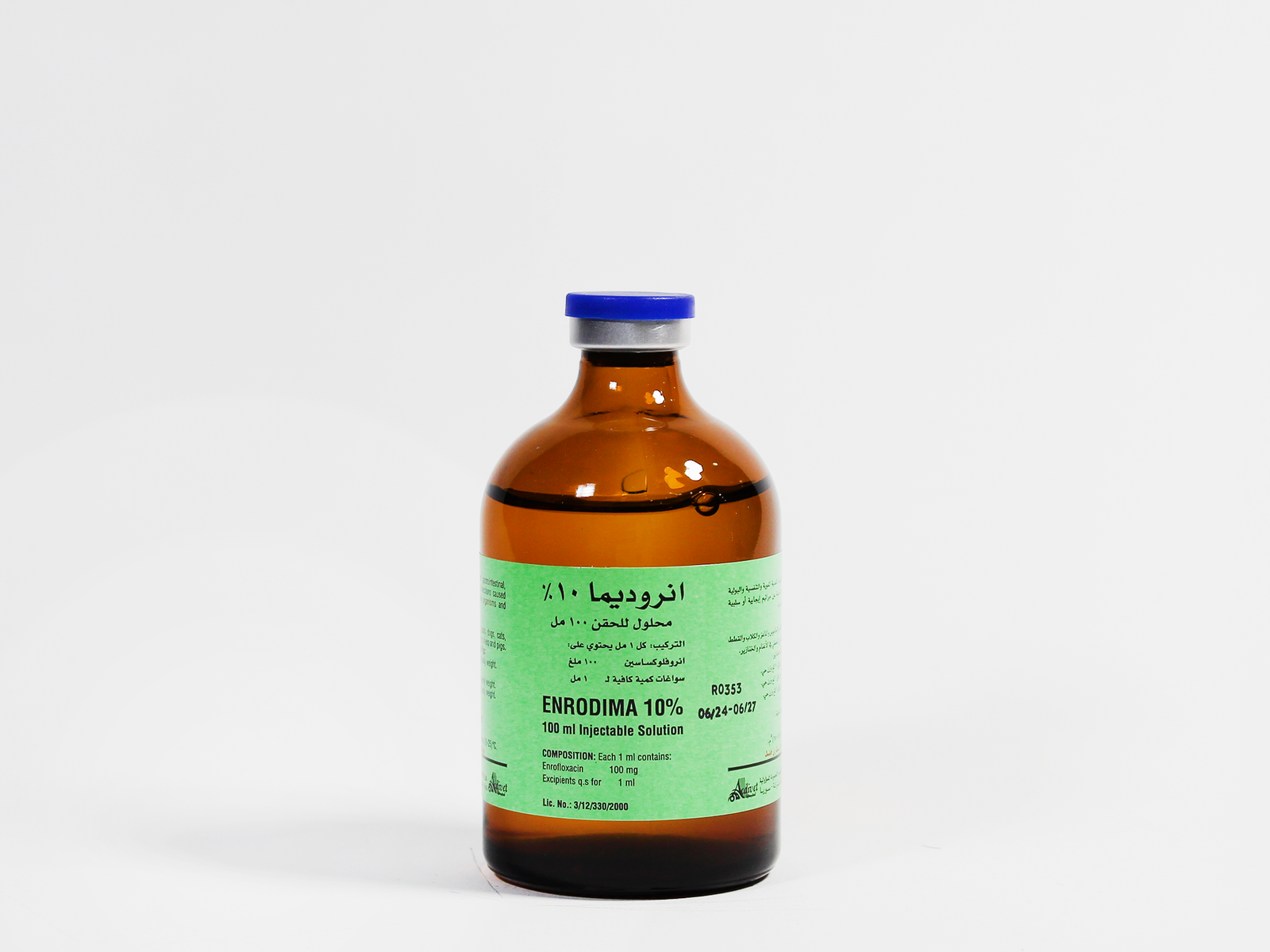
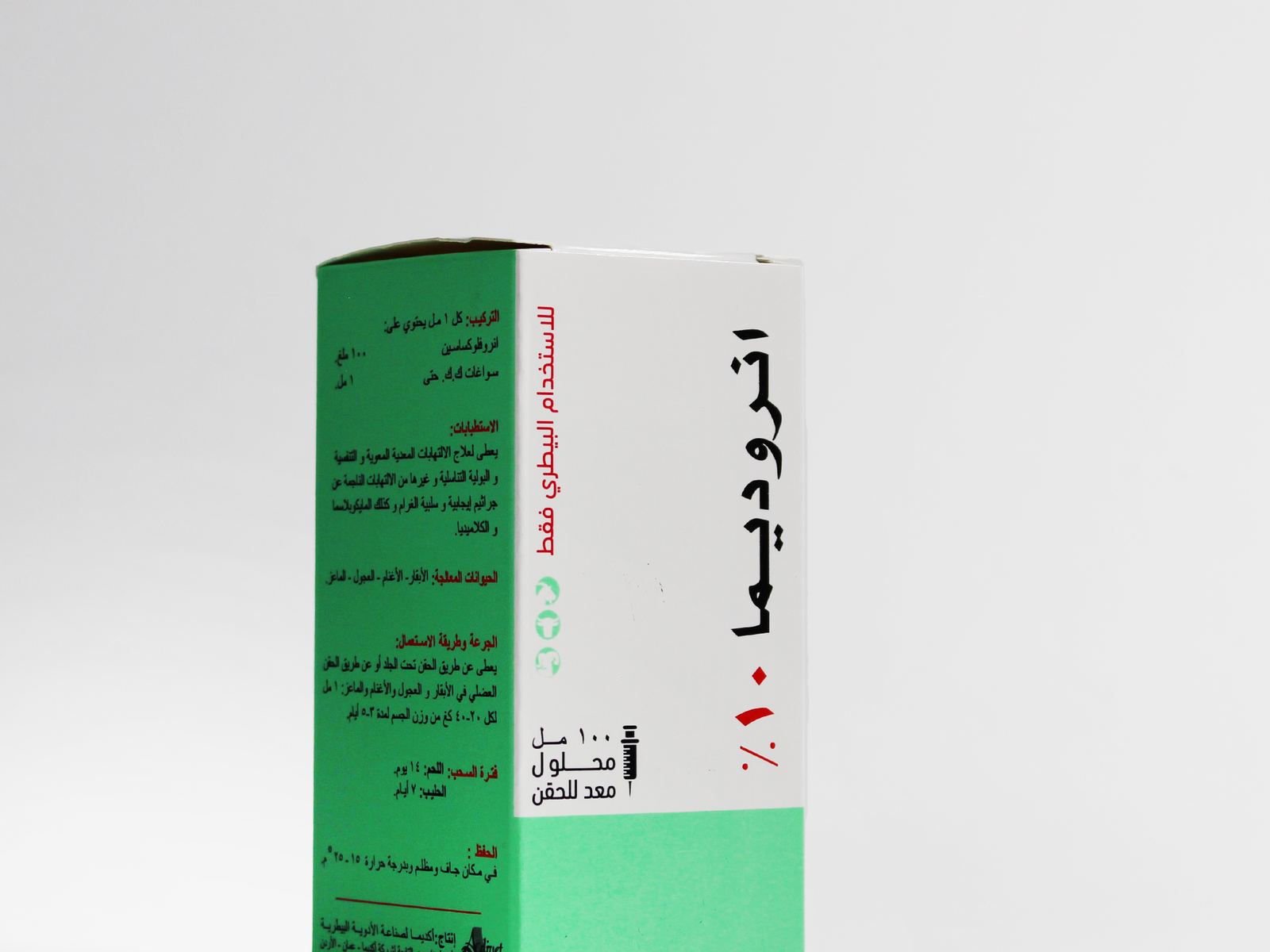
Enrofloxacin Injection / Enrodima 10%
What is Enrofloxacin?
|
Antibiotic
|
Therapeutic Class
|
|
Cat, Dog, Cow, Goat, Horse, Pig, Poultry, Sheep
|
Target Species
|
|
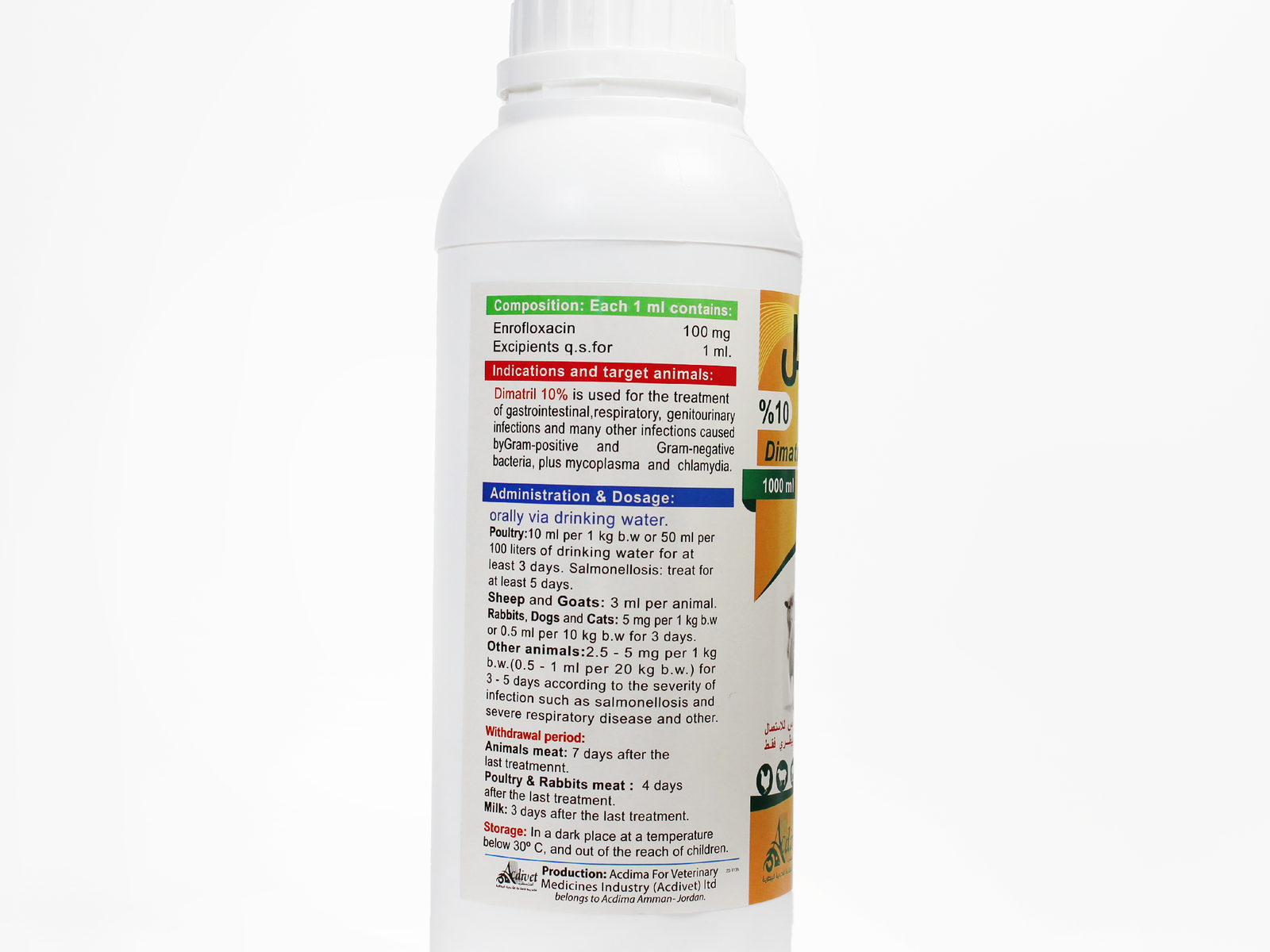
100mg Enrofloxacin
|
Active Ingredients
|
Enrofloxacin
Enrofloxacin Injection is an antibiotic drug used to treat certain bacterial infections in both large and small animals. It is often used to treat skin and ear infections in dogs and cats and urinary infections in dogs. It is also used to treat respiratory infections in cows, pigs, sheep, horses, goats and poultry.
Enrofloxacin belongs to the family of medicines called fluoroquinolone antibiotics. It works by inhibiting DNA and RNA synthesis. Enrofloxacin displays bactericidal activity against a wide range of gram-negative and gram-positive bacteria, including Staphylococcus, Escherichia coli, Pasteurella, Proteus, Campylobacter, and Klebsiella.
It is important to note Enrofloxacin Injection is for veterinary purposes only.
Enrofloxacin Injection is ma
Indications :
Enrodima is recommended for the treatment of most diseases affecting the respiratory, digestive, and genitourinary systems, including uterine infections, as well as other infections caused by a wide range of gram-positive and gram-negative bacteria, including Salmonella, and Mycoplasma. It can be used in cattle, buffaloes, sheep, goats, dogs, cats, rabbits, poultry, and pigs.
Dosage and Administration :
Administer subcutaneously in cattle, buffaloes, goats, dogs, cats, rabbits, and poultry, or intramuscularly in sheep and pigs.
Cattle, buffaloes, sheep, goats, and pigs:
2.5 mg enrofloxacin per 1 kg body weight (equivalent to 0.5 ml of Enrodima 10% per 20 kg body weight).
- The dose may be doubled in cases of severe respiratory infections or Salmonella infection.
Dogs, cats, and rabbits:
5 mg enrofloxacin per 1 kg body weight (equivalent to 0.5 ml of Enrodima 10% per 1 kg body weight).
Duration of Treatment:
- Generally, 3 days.
- In cases of Salmonella infection, treatment is extended to 5 days.
- For neonatal calves infected with Salmonella, it is recommended to administer the first dose by injection, then continue treatment orally in the following days.
Precautions :
Do NOT use Enrofloxacin Injection for animals that:
- have a known allergy or hypersensitivity to any of the ingredients.
- are dehydrated.
- are small or medium breed dogs under 8 months of age, or large breed dogs.
- that have not finished their rapid-growth phase.
- are cats with kidney disease.
Treatment with this drug should be administered with caution if the animal:
- is pregnant or lactating.
- has kidney or liver disease.
- has a seizure disorder.
There are many known interactions between enrofloxacin and other drugs, including antacids, antibiotics, corticosteroids, iron, zinc, levothyroxine, mycophenolate mofetil, methotrexate, nitrofurantoin, probenecid, quinidine, sildenafil, sucralfate, theophylline, and warfarin.
This drug may affect the results of a liver enzyme blood work test.
Use protective gloves when handling this drug.
Side Effects :
As with all pharmaceuticals, some unwanted effects can occur from the use of Enrofloxacin Injection.
Some side effects may include but are not limited to gastrointestinal effects at higher doses.
Serious side effects may include:
- allergic reaction
- uncoordinated walking
- seizures
- depression
- lethargy
- shock
- urinary crystals
- vision changes in cats