




Floroject
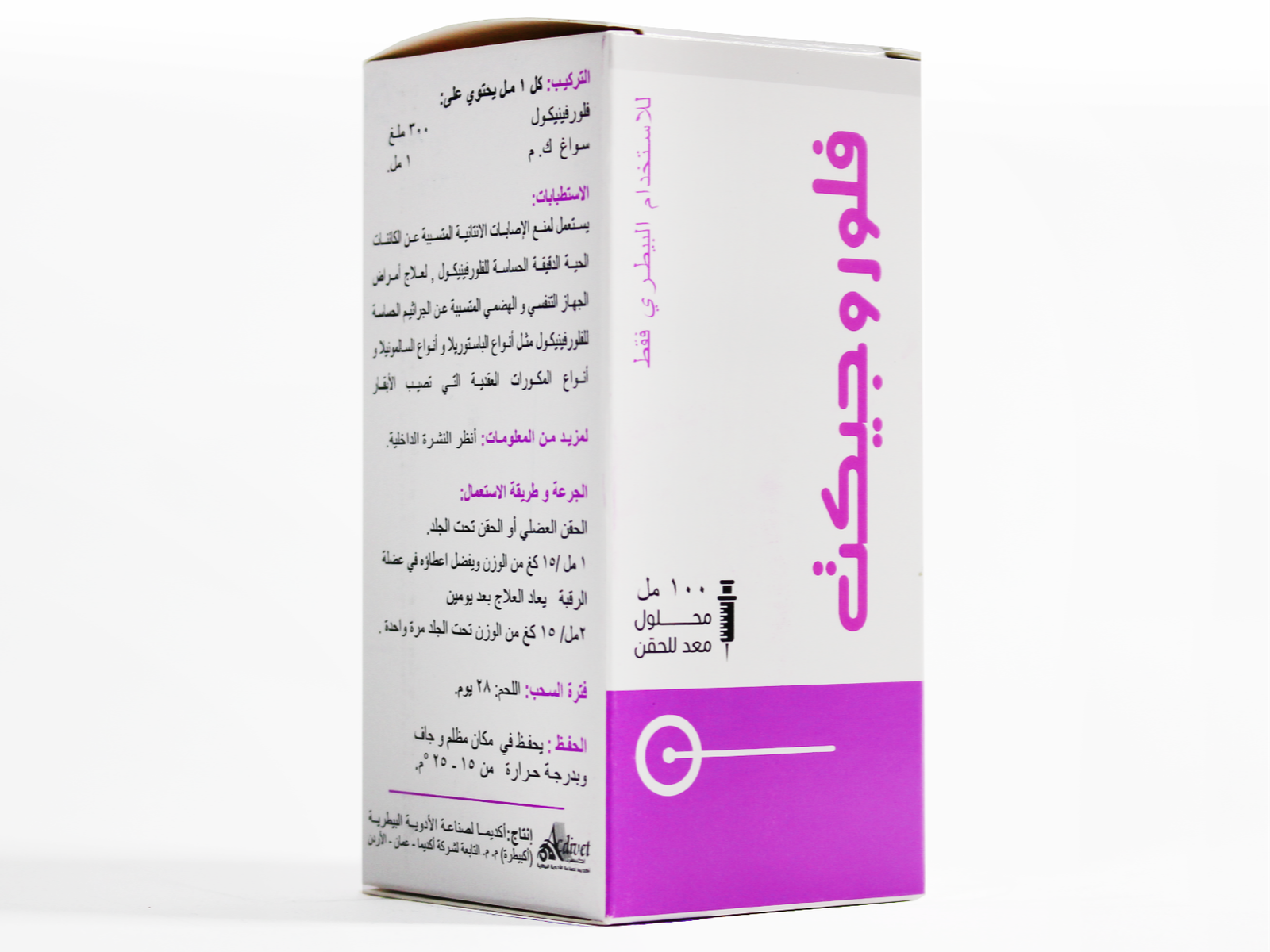
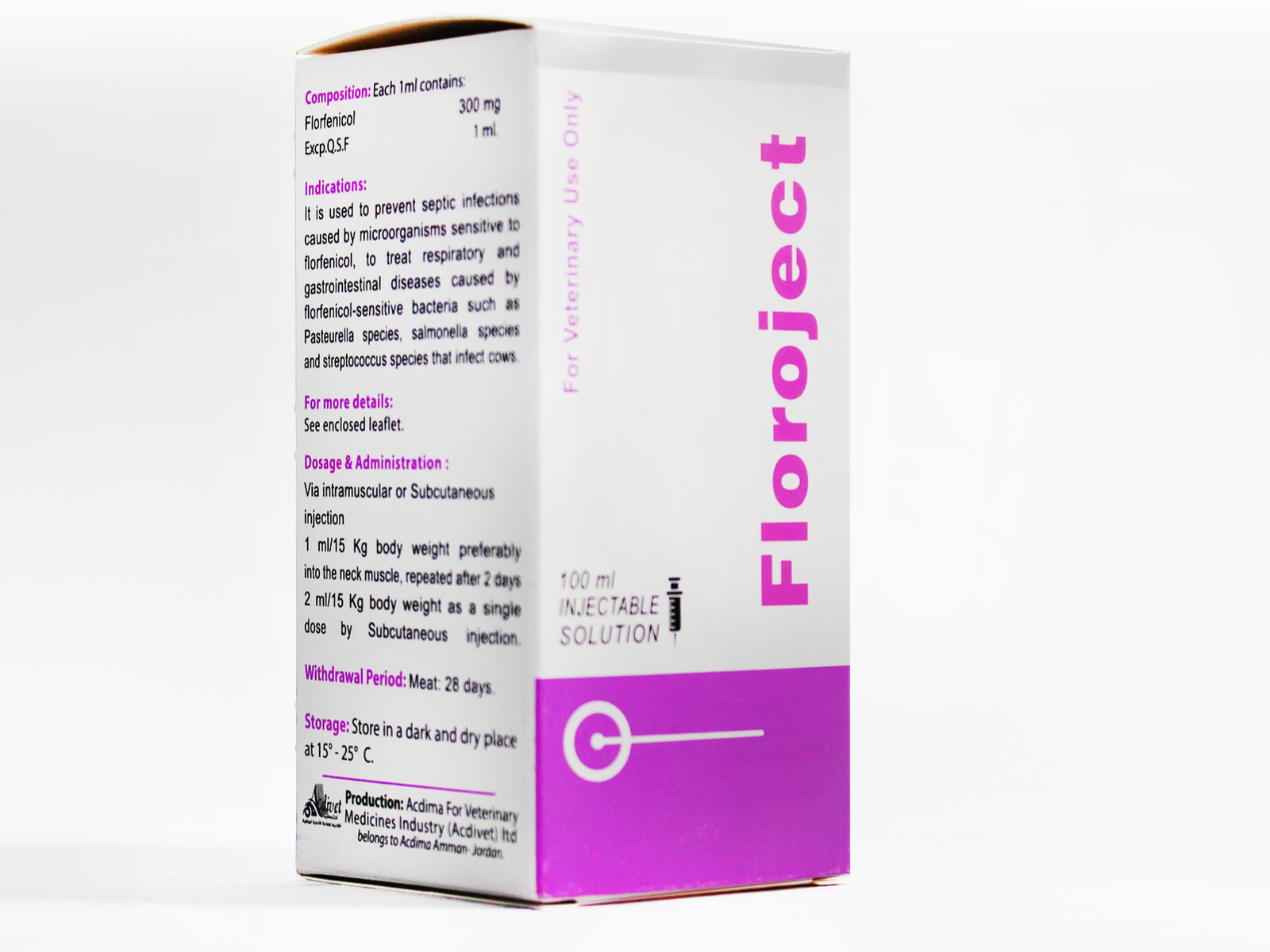
Floroject
Florfenicol Injection is a broad-spectrum antibiotic used for parenteral use.
Florfenicol Injection ise commonly used for the following animals:
- Cattle: Florfenicol Injection is used in cattle for the treatment and control of bovine respiratory disease (BRD). It targets the major bacterial causes of BRD, such as Mannheimia haemolytica, Pasteurella multocida, and Histophilus somni. It also aids in the treatment of foot rot.
- Swine: In swine, the drug is utilized to treat bacterial diseases such as swine respiratory disease complex (SRDC). This includes conditions caused by susceptible bacteria like Actinobacillus pleuropneumoniae, Pasteurella multocida, and Haemophilus parasuis.
- Poultry: Florfenicol Injection is not typically used in poultry. But when it is, it is utilized for conditions like avian respiratory disease complex (ARDC), which involves pathogens like Pasteurella multocida and Mycoplasma gallisepticum.
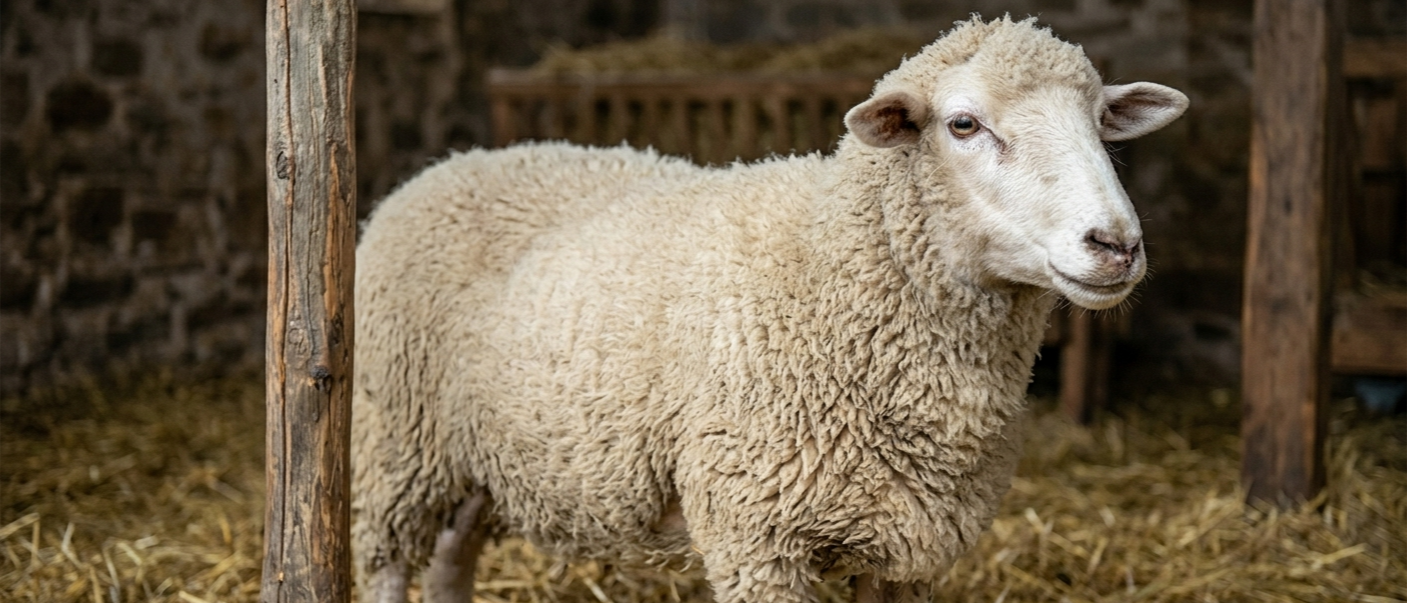
- Sheep: It is used in sheep for the prevention and treatment of respiratory tract infections caused by bacteria like Mannheimia haemolytica, Pasteurella multocida, and Histophilus somni.
It's used to treat bacterial infections such as:
- respiratory diseases
- bovine interdigital phlegmon
- pasteurellosis
- salmonellosis
- actinobacillosis
- mycoplasmal infections
- infectious keratoconjunctivitis (pink eye) in cattle.
This drug has been manufactured as a liquid, which is packaged in a vial. It is intended to be administered by intramuscular injection. Florfenicol Injection is intended for veterinary use only.
Florfenicol Injection is a prescription-only medication and should only be used under the guidance and supervision of a qualified veterinarian.
The onset of action depends on the condition being treated and the severity of the infection. Florfenicol usually begins to exert its antibacterial effects within a few hours after administration.
Florfenicol functions by targeting the bacterial ribosome, a crucial component responsible for synthesizing proteins within the bacterial cell. It specifically binds to the 50S subunit of the ribosome, preventing the transfer of amino acids to the elongating peptide chain. This disruption in protein synthesis inhibits bacterial growth and replication, leading to the eventual bacterial cell death. This renders Florfenicol effective against a variety of bacterial pathogens.
Florfenicol Injection is primarily indicated for use in livestock animals and is not commonly used in companion animals. There are alternative antibiotics available that are specifically formulated and approved for use in these species.
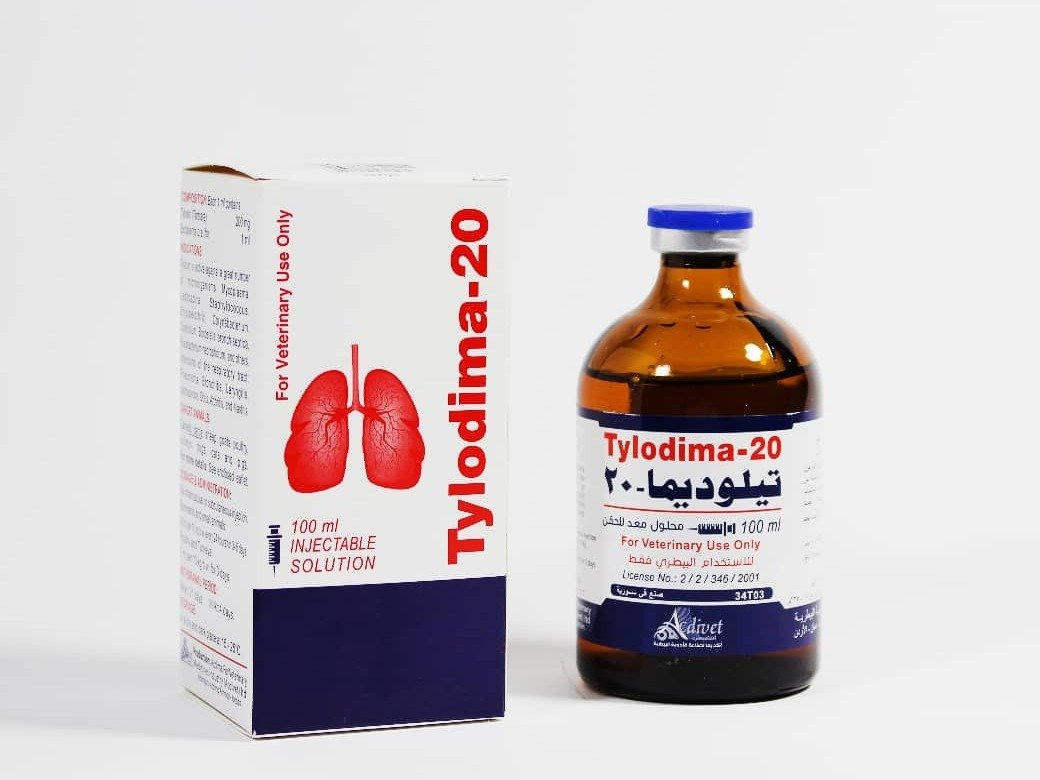
Florfenicol Injection is available in vials of 10ml, 30ml, 50ml, and 100ml, each packaged in individual boxes.
Florfenicol Injection comes in different concentrations: 100mg/ml (10%), 200mg/ml (20%), and 300mg/ml (30%)
When handling Florfenicol Injection, wear appropriate personal protective equipment, such as gloves and safety glasses, to prevent accidental exposure, as it may cause skin irritation or eye irritation.
For cattle, there is a withdrawal time of 38-44 days for meat. For pigs, the withdrawal time is about 14 days. A withdrawal period has not been established in pre-ruminating calves. Do not use in calves that are to be processed for veal.
The safety of Florfenicol in pregnant or lactating animals has not been extensively studied. It should only be used if the potential benefit justifies the potential risk, and always under the guidance of a veterinarian.
There are no known interactions between Florfenicol Injection and vaccines, but always check with a veterinary professional before starting any medication.
Possibly. Bacterial resistance to Florfenicol may develop over time, especially with prolonged or incorrect usage. Susceptibility testing should be done regularly to monitor the drug's efficacy and detect resistance patterns.
This medication should be stored in a dark, dry location under 30°C. The vial should be sealed tightly.
The usual dose is 20mg/kg given by IM. The dose should be repeated after 48 hours.
The typical dosage for pigs is 15mg/kg administered intramuscularly, with a second dose given after 48 hours.
For sheep, the usual dose is 20mg/kg given intramuscularly for 3 consecutive days.
If a dose of Florfenicol Injection is missed, administer it as soon as you remember, but if it is nearly time for the next scheduled dose, skip the missed dose and return to the regular schedule. Do not administer a double dose to make up for the missed one.
If you suspect an overdose, seek veterinary attention immediately. Overdosing can lead to serious health complications, including toxicity.
Refer to a veterinary doctor or pharmacist for guidelines on dosage.